
Wellington doesn’t do subtle weather. If you live here, you already know the drill — horizontal rain off the harbour, gale-force gusts funnelling straight up the valley, and a stickiness in the air that never quite lifts, even between fronts. What’s less obvious is what all that moisture does to the boxes sitting in your garage, the sofa in your shed, or the filing cabinet in your spare room. Wellington was officially the wettest of New Zealand’s six main centres in 2024, and its relative humidity regularly sits above 80% through the cooler months, rarely dropping much below the mid-50s even at the height of summer. For anything stored outside a proper indoor facility, that’s a slow, quiet threat to everything you own.
From the hillside villas of Kelburn and Mount Victoria to the older weatherboard homes of Khandallah and Karori, plenty of Wellington properties simply weren’t built with modern storage needs — or modern damp-proofing standards — in mind. Add a driveway shipping container in Miramar or an uninsulated garage in Alicetown or Naenae, and you’ve got near-perfect conditions for mould, rust and musty smells to take hold. This guide covers why Wellington’s humidity is a genuine risk (not just a weather cliché), what it actually does to your belongings, and why indoor, dehumidified storage makes all the difference.
Key Takeaways
- Wellington’s relative humidity regularly sits above 80% through winter and rarely drops below the mid-50s even in summer — well above the 50–60% range considered safe for storing most household items
- Mould, mildew, rust and corrosion can take hold within months, not years, once items are exposed to sustained high humidity
- Garages, sheds and driveway containers offer no real protection — a sealed metal container can trap more condensation than open air through a process sometimes called “container rain”
- Electronics, upholstery, documents, leather and musical instruments are the most vulnerable categories to humidity damage
- Indoor, actively dehumidified storage keeps relative humidity in the 50–60% range most conservators and storage experts recommend
- Good preparation still matters even in a climate-controlled unit — cleaning, drying and using breathable covers protects items further
- StoreStuff’s Petone facility runs active dehumidification throughout, with an undercover loading bay so belongings never get wet on the way in
Why Wellington’s Humidity Is a Genuine Storage Risk
It’s tempting to write off “Wellington’s humid” as just another line locals use to explain frizzy hair or a sticky steering wheel. But the numbers back it up. NIWA’s climate records show Wellington’s relative humidity tracking consistently higher than drier centres like Christchurch, and the city’s exposed harbour position and wind-funnel geography mean moist sea air gets pushed through the region constantly rather than clearing.
Housing stock compounds the problem. Much of the region’s character housing — the villas of Mount Victoria and Thorndon, the older bungalows scattered through Karori and Ngaio — predates modern insulation and weathertightness standards, and New Zealand’s well-documented building weathertightness issues (the subject of ongoing work by BRANZ, the country’s building research authority) mean plenty of local garages, sheds and spare rooms struggle to keep moisture out at the best of times, let alone provide a stable, dry environment for anything stored long-term.
What High Humidity Actually Does to Your Belongings
Moisture damage isn’t dramatic — there’s no single flood moment. It’s cumulative, and by the time you notice it, the damage is often already done.
- Furniture & upholstery — musty odours develop first, followed by mildew blooms on fabric and, in prolonged cases, rot in timber frames and joints
- Electronics & appliances — condensation corrodes circuit boards and connectors, and components that seem fine on power-up can fail within weeks of coming out of damp storage
- Documents, books & photographs — pages warp, ink degrades, and prolonged damp causes “foxing” (the brown speckling that ruins old photos and papers) as well as pages sticking permanently together
- Clothing & leather goods — mildew spotting, colour transfer between damp fabrics, and leather that stiffens, cracks or grows a white mould bloom
- Musical instruments & sports equipment — timber warping in guitars and pianos, metal fittings rusting, and mildew taking hold in padded cases and bags
Indoor Storage vs Garages, Sheds & Shipping Containers
Driveway shipping containers are a common (and cheap) storage fix around Wellington, but they’re one of the worst options for anything humidity can damage. Steel heats and cools far faster than the air around it, and as temperatures swing between a cold Wellington night and a sunny afternoon, moisture condenses on the underside of the roof and drips back down onto whatever’s stored below — an effect the shipping industry has long called “container rain.” An uninsulated garage or garden shed isn’t much better; it simply tracks the outdoor humidity almost exactly, offering no real barrier at all.
Purpose-built indoor storage is a different proposition entirely. Rather than a sealed box exposed to the weather, it’s an insulated, weathertight building with active dehumidification running continuously to hold relative humidity in the 50–60% range — the level most conservators and storage professionals recommend for protecting furniture, electronics, documents and fabric from long-term damage.
How StoreStuff Keeps Wellington’s Weather Out
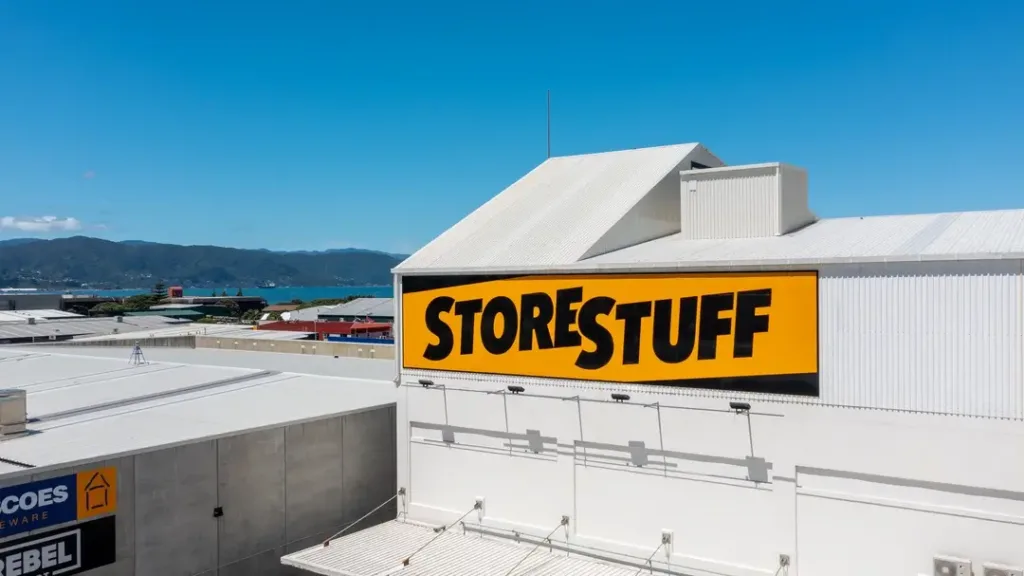
StoreStuff’s Petone facility was built around this exact problem. Dehumidifiers run throughout the building, not as a premium add-on but as standard on every unit, and the undercover loading bay means your belongings are never exposed to rain during move-in or move-out — no small thing on a classic Wellington weather day. It’s why customers from Johnsonville, Eastbourne and Newlands make the short drive just as often as those right around the corner in Alicetown and Kilbirnie — rather than settle for a leaky garage or a driveway container.
Beyond the climate control, the facility is family owned and run by Tom and Peter Southgate, with 4K CCTV, individually coded 365-day access, and fire sprinklers throughout. Every unit rental includes free use of the move-in truck, and there are no lock-in contracts — you pay for the space you need, for as long as you need it, with unused rent refunded if you leave early.
Protecting Your Items Even in Climate-Controlled Storage
A dehumidified unit does most of the heavy lifting, but a little preparation goes a long way:
- Clean and fully dry everything before it goes into a box — trapped moisture causes damage even in a dry unit
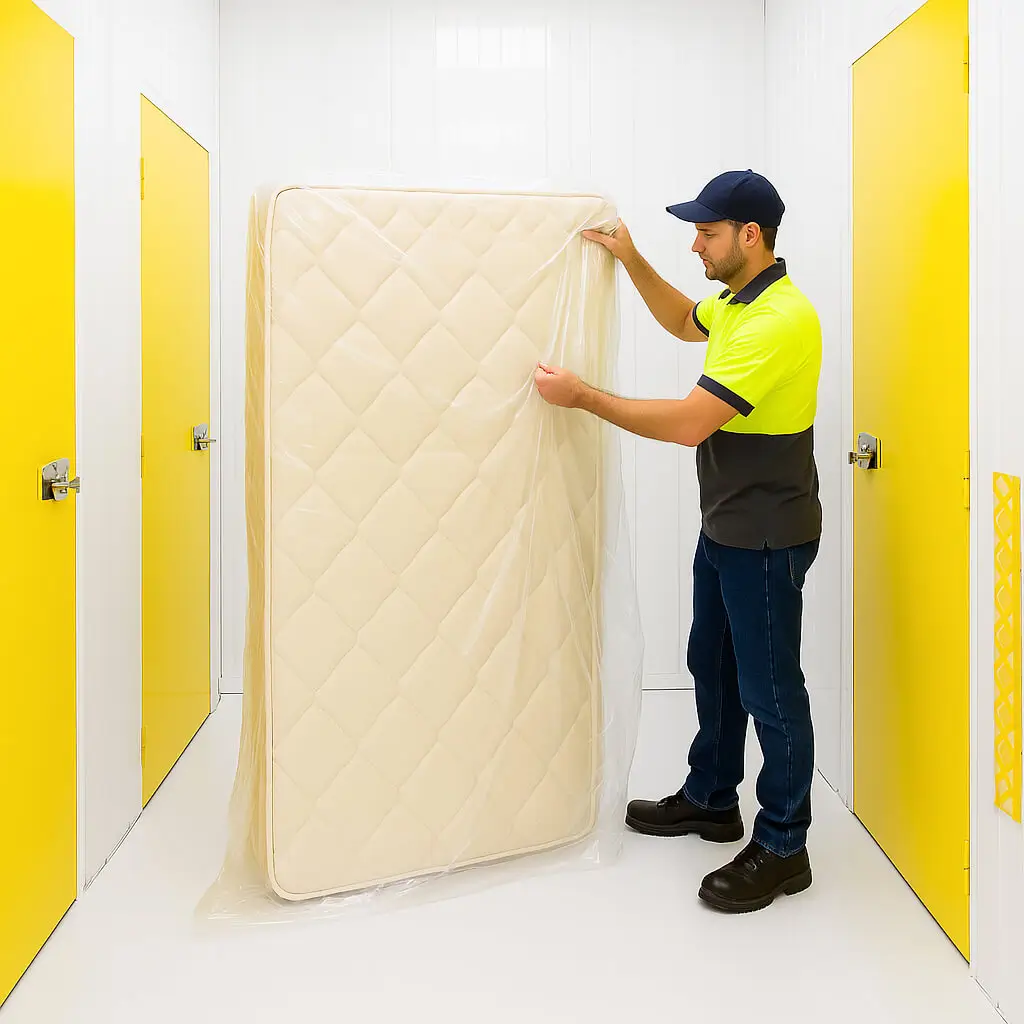
- Use breathable furniture covers rather than plastic sheeting, which can trap condensation against the surface
- Elevate boxes and furniture off the floor on pallets or shelving where possible
- Leave small gaps between stacked items so air can still circulate
- Add silica gel packs inside boxes holding particularly sensitive items like electronics, photos or leather
- Avoid packing a unit completely solid wall-to-wall — airflow matters, even indoors
Ready to Get Your Belongings Out of Wellington’s Weather?
If your garage, shed or driveway container has been quietly exposing your belongings to Wellington’s humidity, moving them into a proper indoor facility is a straightforward fix. First, call 04 260 2138 or email lowerhutt@storestuff.co.nz to talk through what you need to store and get a transparent, no-hidden-fees quote. Second, come and see the Petone facility for yourself — check the dehumidified units, the security features and confirm the location works for you. Third, book your unit and use the free move-in truck to get everything across in one dry, easy trip.
Whether it’s a couple of boxes of documents or a full household of furniture, StoreStuff gives your belongings a genuinely dry, secure home — the Kiwi way.
Frequently Asked Questions
Does Wellington really have a humidity problem for storage, or is that overstated? It’s a genuine issue, not just a talking point. Wellington’s relative humidity regularly sits above 80% through winter, and even summer rarely dips much below the mid-50s. That’s consistently higher than the 50–60% range considered safe for storing furniture, electronics, documents and fabric long-term, which is exactly why unprotected garages, sheds and containers are such a common source of mould and mildew complaints across the region.
What’s the actual difference between “indoor” storage and “climate-controlled” storage? Indoor storage means your belongings are inside an enclosed, weathertight building rather than exposed to the elements — that alone helps. Climate-controlled (or dehumidified) storage goes a step further, actively managing humidity with dehumidification equipment to keep relative humidity in a consistent 50–60% range regardless of what’s happening outside. StoreStuff’s Petone facility is both: fully indoors and actively dehumidified throughout.
Which items are most at risk from Wellington’s humidity? Anything porous or metal is vulnerable. That includes upholstered furniture, mattresses, books, photographs and paperwork, leather goods, musical instruments, and any electronics or appliances with exposed circuit boards or metal fittings. Solid plastics and sealed, well-wrapped items fare better, but even they benefit from a stable, dry environment over months of storage.
Is a shipping container in the driveway a reasonable alternative to indoor storage? Not for anything humidity-sensitive. Steel containers heat and cool quickly, and the temperature swings between day and night cause condensation to form on the roof and drip onto stored items below — a well-known issue in the shipping industry sometimes called “container rain.” Containers also don’t stop damp ground moisture rising up from underneath, which is a particular problem on Wellington’s clay and coastal soils.
How much does indoor, dehumidified storage cost in Wellington? At StoreStuff, indoor units start from around $48 a month for a 1m² locker up to $597 a month for the largest 16.5m² unit, with no hidden fees and unused rent refunded if you leave early. Every rental includes free use of the move-in truck, which typically saves another $150–$300 compared with hiring a commercial van. Call 04 260 2138 for a quote matched to exactly what you need to store.
Source Links
- NIWA (National Institute of Water and Atmospheric Research) — Climate Data & Mean Relative Humidity — https://niwa.co.nz/climate-and-weather/mean-relative-humidity
- NIWA — 2024 Annual Climate Summary — https://niwa.co.nz
- MetService — Wellington Climate & Forecasts — https://www.metservice.com/towns-cities/locations/wellington
- BRANZ (Building Research Association of New Zealand) — https://www.branz.co.nz
- Consumer NZ — Self Storage Guide — https://www.consumer.org.nz/articles/self-storage
- Self Storage Association of Australasia — https://www.ssaa.asn.au
About StoreStuff Self Storage Wellington
StoreStuff Self Storage offers premium indoor self-storage solutions across the Wellington region from our centrally located Petone facility. Serving Wellington CBD, the Hutt Valley, and all Greater Wellington suburbs, we specialise in protecting household and business belongings from Wellington’s humidity and weather with fully dehumidified, indoor units. Established in 2023, StoreStuff embodies our tagline: “It’s Self Storage, The Kiwi Way.”