New Zealand’s leaky homes crisis is one of those things every Kiwi has half an opinion on, even if they’ve never lived through it directly. It’s made homeowners across the country — Wellington included — far more attentive to weathertightness than they used to be. But there’s a related storage risk that gets talked about far less, and it has nothing to do with cladding type or the year your house was built: your garage.
Whether it’s a single garage tucked under a Churton Park family home or a detached shed in Kelson or Maungaraki, most Wellington garages share the same basic weaknesses — and they’re quietly affecting anything stored in them long before anyone notices.
Key Takeaways
- New Zealand’s leaky homes crisis mainly affected homes built roughly 1994-2004 with monolithic cladding and no drainage cavity — a specific, well-documented issue tied to cladding type and construction era
- Garages have a separate, far more common problem that affects homes of every era: uninsulated structure, a bare concrete slab, and roller doors that rarely seal well against wind-driven rain
- Concrete slabs without a vapour barrier let ground moisture wick upward, dampening anything stored directly on the floor
- An uninsulated garage tracks outdoor humidity almost exactly, offering close to zero real protection compared to your house
- The fix doesn’t require renovating your garage — moving humidity-sensitive items into indoor storage solves the problem without any building work at all
New Zealand’s Leaky Homes Legacy — What It Actually Means
New Zealand’s leaky homes crisis mainly affected buildings constructed between roughly 1994 and 2004, when monolithic cladding systems (plaster, stucco, fibre cement) were often applied directly to timber framing with no drainage cavity behind them. Combined with a 1995 change that allowed untreated timber framing, moisture that got past the cladding had nowhere to escape and no natural resistance to rot once it did. Repair and remediation costs were estimated in the billions of dollars nationally, and the Building Code was overhauled in 2004 to require drained cavity systems on new builds. Wellington, like every region, has its share of homes and townhouses from that era — but the crisis was about cladding and framing, not garages specifically.
Why Your Garage May Have a Different (More Common) Problem
A garage doesn’t need to be part of a “leaky home” to be a poor place to store your belongings — most Wellington garages have built-in weaknesses regardless of when the house was built:
- Bare concrete floors with no vapour barrier let ground moisture wick straight up into anything sitting on it
- Uninsulated, unlined walls mean the garage tracks outdoor temperature and humidity almost exactly, offering little real separation from the weather outside
- Roller doors are rarely a tight seal, and wind-driven rain regularly gets past the gap at the base
- Poor or no ventilation lets condensation build up, especially through Wellington’s cold, damp winters
- If your garage sits under an extension or addition built during the high-risk 1994-2004 window, it’s also worth checking whether that specific structure has any documented weathertightness history
Signs Your Garage Is Already Affecting What’s Stored There
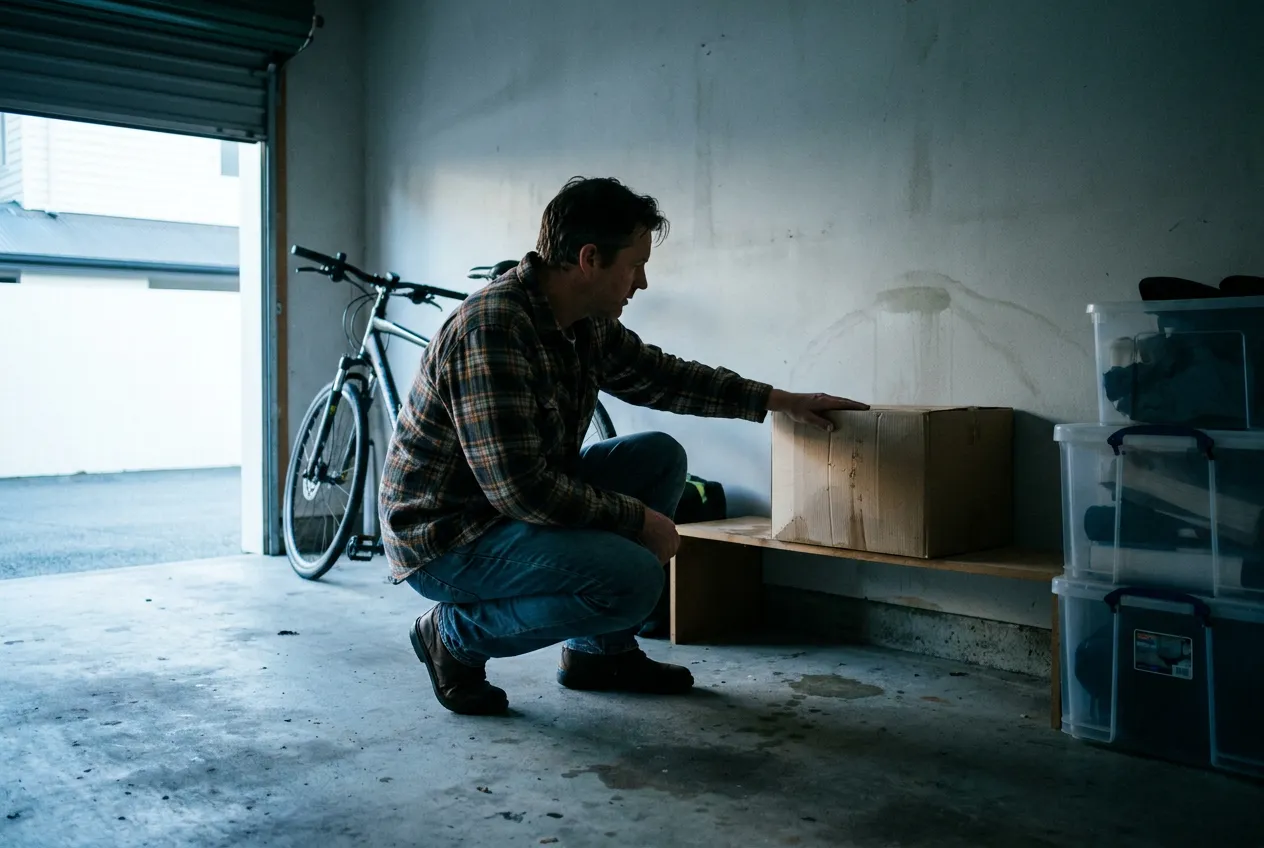
The damage is usually gradual rather than dramatic. Watch for a musty smell as soon as you open the door, rust starting on tools, bike chains or metal shelving, soft or stained patches on the underside of cardboard boxes, and any mould spotting on fabric or timber items left against an outside wall.
What Actually Belongs in a Garage (and What Doesn’t)
Tools, outdoor equipment, and anything already built to handle the elements generally hold up fine in a typical garage. Furniture, electronics, documents, photographs, clothing, and anything boxed in cardboard for the long term don’t — these are exactly the categories most vulnerable to the damp, temperature-swinging conditions a bare garage creates.
The Simple Fix: Move the Vulnerable Stuff Indoors
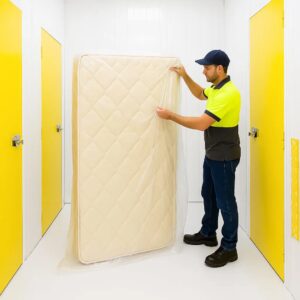
You don’t need to insulate, line or reroof your garage to solve this — the more practical fix is simply separating what genuinely belongs there from what doesn’t. Keep the mower, tools and outdoor gear in the garage, and move furniture, boxed documents, electronics and anything sentimental into an indoor, dehumidified unit instead. It’s a smaller, cheaper change than any building work, and it removes the risk entirely rather than just reducing it.

Ready to Get the Vulnerable Stuff Out of Your Garage?
First, call 04 260 2138 or email lowerhutt@storestuff.co.nz to talk through what you’re looking to move out of storage limbo. Second, use our storage unit size guide to work out roughly what size you’ll need — often smaller than people expect, since you’re only moving the vulnerable items, not everything in the garage. Third, book online or visit the Petone facility in person and use the free move-in truck to shift everything across in one dry trip.
Your garage isn’t going anywhere, and neither is Wellington’s weather — but what you choose to store in each one is entirely up to you.
Frequently Asked Questions
Does my home need to be a “leaky home” to have a garage storage risk? No. The leaky homes crisis was specifically about cladding and framing on the house itself, mostly built 1994-2004. Garage dampness is a separate, much more common issue caused by bare concrete floors, poor insulation and leaky roller door seals — it affects garages of every age and build type.
How can I tell if my garage has a moisture problem? A musty smell on opening the door, rust forming on tools or metal shelving, and damp or stained patches on the underside of boxes are the clearest early signs. If you’re unsure, leave a plain cardboard box on the floor for a few weeks and check the base for softening or staining.
What’s the actual difference between my garage and StoreStuff’s indoor units? StoreStuff’s units are fully enclosed, insulated and actively dehumidified, keeping relative humidity in a consistent 50-60% range regardless of the weather outside. A typical home garage has none of these features and simply tracks the outdoor conditions.
Can I fix the problem by improving my garage’s ventilation or insulation myself? It can help, but rarely solves it completely — retrofitting a vapour barrier under an existing slab isn’t practical, and most DIY ventilation improvements only partially address humidity. For genuinely vulnerable items, moving them into dedicated indoor storage is a more complete and usually cheaper fix than a garage renovation.
Is it worth insuring items stored in a garage versus a storage unit? Home and contents insurance often has specific exclusions or lower limits for items stored in garages, sheds or outbuildings, particularly for gradual damage like mould or corrosion, which is generally excluded regardless of where an item is stored. It’s worth checking your policy wording either way, and StoreStuff offers storage-specific insurance for peace of mind.
Source Links
- BRANZ (Building Research Association of New Zealand) — https://www.branz.co.nz
- Settled (Sorted/CFFC) — Weathertightness & Leaky Homes — https://settled.govt.nz
- Consumer NZ — Self Storage Guide — https://www.consumer.org.nz/articles/self-storage
About StoreStuff Self Storage Wellington
StoreStuff Self Storage offers premium indoor self-storage solutions across the Wellington region from our centrally located Petone facility. Serving Wellington CBD, the Hutt Valley, and all Greater Wellington suburbs, we specialise in protecting household belongings from Wellington’s damp with fully dehumidified, indoor units — no garage, shed or driveway container required. Established in 2023, StoreStuff embodies our tagline: “It’s Self Storage, The Kiwi Way.”